


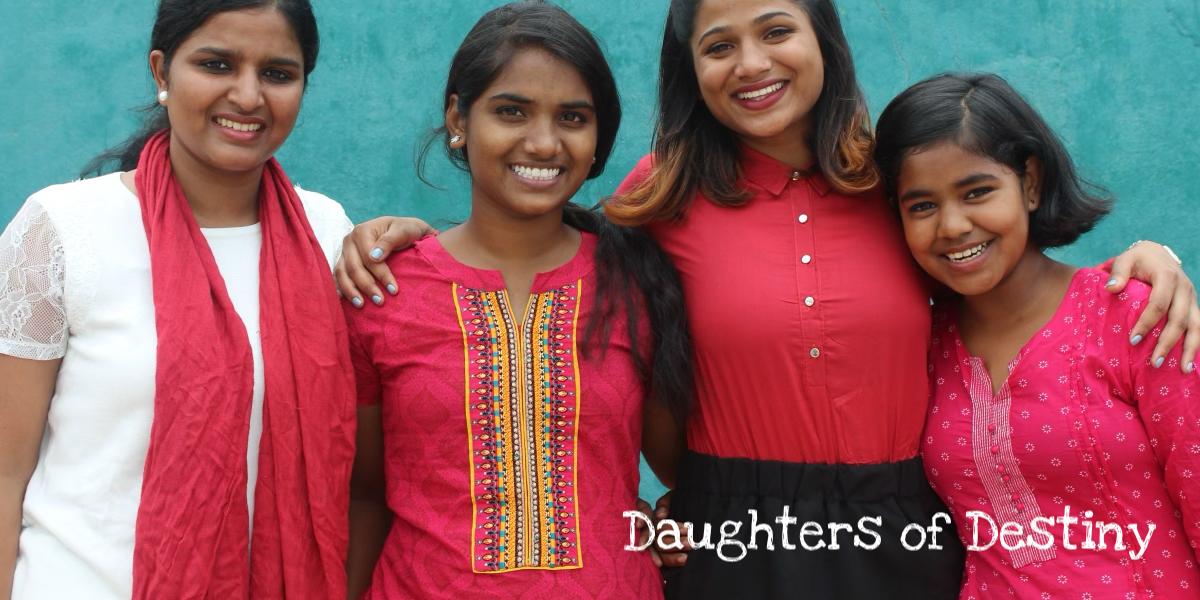


In my recent job searching, I came across the Netflix documentary Daughters of Destiny which follows five girls who attend Shanti Bhavan , a boarding school for India’s most disadvantaged children in Tamil Nandu. As someone who has spent the last 14 years empowering girls to be leaders of their communities, the concept of such a school was truly inspiring. Personally, I am also the parent of a child adopted from India. I know he was born in rural India where the caste system is still a part of community life, and I can only assume he would have lived a very disadvantaged life. It was because his birth mother could not take care of him that he was taken to the Priyadarshini Orphanage.
I binged watched all of the documentary episodes cheering for each girl to achieve her goals!
How the Shanti Bhavan school works – only one child from the family can attend the school, and they start attending the school when they are 4 years old. Once students finish school, the expectation is that they return to their family and community to make it a better place.
Some of my thoughts after watching the documentary –
The children from Shanti Bhavan did go back home for vacations during their stay at the boarding school, which I am sure came with mixed emotions. One girl in the documentary said she didn’t like going home because all she was expected to do was cook and clean. Those worlds were literally night and day different. Some of the children felt badly for their parents and how hard they were working for so little. The director of the school felt that going back home was important so they could remember and still relate to their family and community members. If the children are completely detached from their family and community, how will they come back to make a meaningful difference? I can only imagine the kind of “code switching” the children had to do from one environment to the other.
The family dynamics were often complicated. In some families, both parents were on board with the child attending the school, while in other families one parent made the decision. And I am sure there was some jealously and resentment from the siblings not chosen to attend the school. The concept of saving one child is super hard and not something I would want to be faced with. But isn’t saving one child better than saving none of them? (Honest question)
Learning differences were handled with grace, but academic rigor was still expected. One student was identified as being dyslexic. She struggled with some of the academic work, so she was given one on one tutoring, repeated grades, and the second language requirement was waived. There is a fine line between allowing accommodations and maintaining the academic rigor needed for the students to pass the exams needed for college, and the school walked that line as best they could.
We saw a hint of other types of instruction happening in the documentary, which as an educator of social skills made my heart happy. One clip shows students learning about different virtues. Since it was highlighted that female students often faced more struggles finding the balance between the school and home environment, I am wondering if some individual skills and strategies around being true to yourself but also considering the thoughts and feelings of others might help them better navigate their new role.
The documentary is streaming on Netflix. I would encourage all of my educator and helping professional friends to watch. You will not be disappointed. Maybe we will get an update on these girls later in life? I would love to see what they are up to now!